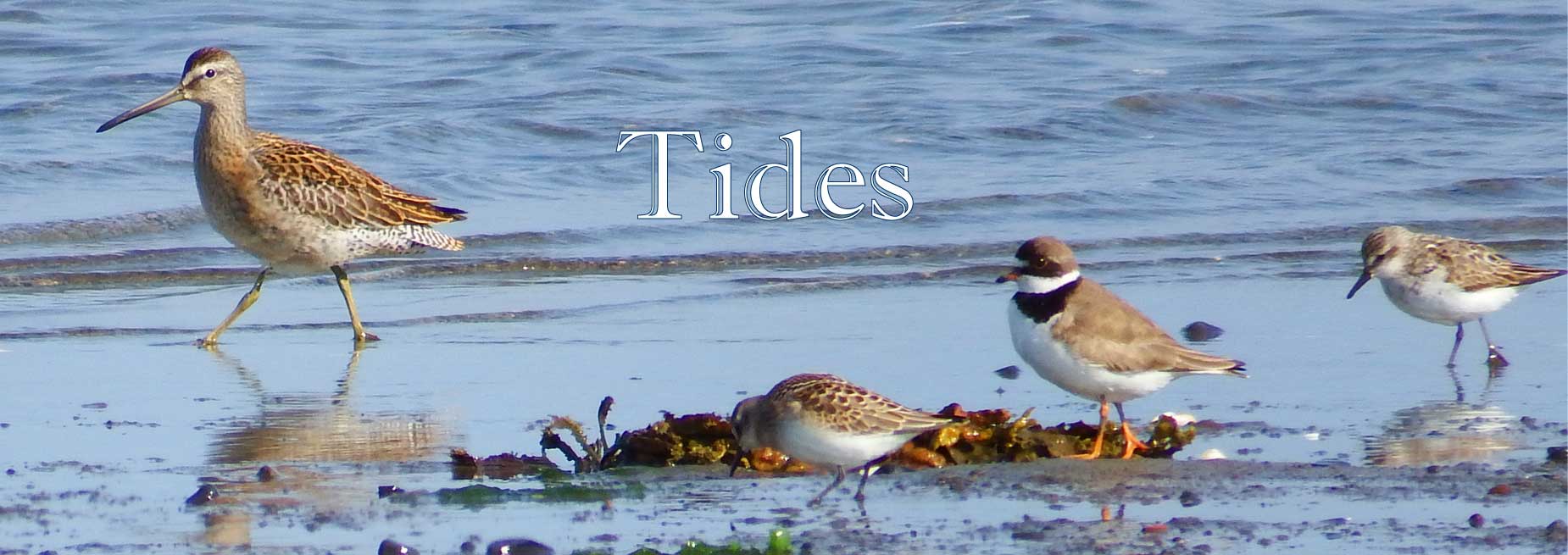
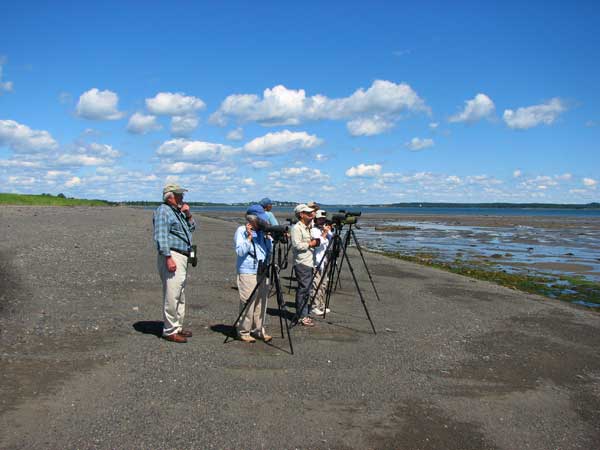
 Maine has some of the highest tides in the world. Tides are critical to certain birding opportunities, especially for shorebirds. For tide chart information, visit: US Harbors.
At high tide, shorebirds go to roost. As tides fall, the birds flock to "first mud" and begin feeding voraciously. Often, this is when they are most concentrated for viewing (and most vulnerable to disturbance!) As tides continue to fall, the peeps disperse across the wide mud flats. Viewing becomes more distant and difficult. The rising tide pushes the birds back to "last mud" and the cycle repeats.
Tide also matters on puffin trips to Machias Seal Island. It is easier to land visitors at high tide, and the captains time their visits during this period. Thus, the departure time differs every day.
Some sites where tide matters:
The best time to see concentrated shorebirds at South Lubec Sand Flats in Downeast Maine is about 2-3 hours before and after high tide. Arrive at the flats 3-1/2 hours before high tide or 90 minutes after, which leaves sufficient time to walk to the end of the spit as the mud conditions become optimal. The highest and lowest tides occur on full and new moons in the lunar cycle, and birders should start down the beach 30 minutes earlier than usual.
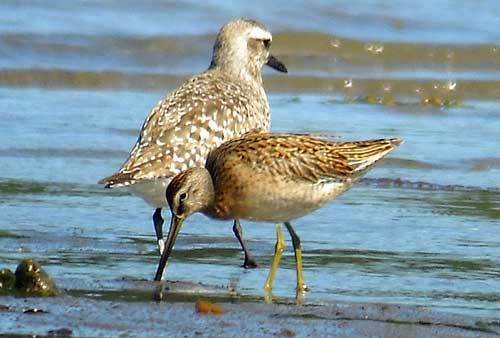 In Midcoast while winter birding, Reid State Park is better at high tide and Popham Beach State Park is better at low. The water depth drops rapidly at Reid, so the variation in exposed beach is relatively small. This brings the sea ducks close to shore. At Popham, the beach is shallow and the exposed area is beach is huge at low tide. Besides making it better for shorebirds, the wide expanse also entices Snow Buntings, Horned Larks, and Lapland Longspurs in autumn.
At Weskeag Marsh, also in Midcoast, shorebirds and waders concentrate at high tide. As tides fall, many shorebirds head over to Thomaston to forage in the mudflats adjacent to the boat yard.
In Scarborough Marsh near Portland, high tide often pushes the Nelson's and saltmarsh sparrows into closer view. As tide falls, wading birds and shorebirds move onto the salt pannes visible from the bike/pedestrian path. At about three hours before and after high tide, nearby Pine Point reaches the optimal level for good shorebirding in August and September.
All along the coast in winter, Purple Sandpipers roost at high tide, gathered closely in tight flocks just above the splashing surf. At low
tide, they forage in the seaweed next to the water and can be harder to pick out.